

Milled Grain Bread and Pasta Resources
A follow up to "Ready To Enjoy Bread And Pasta Again?"

As promised, here is my list of resources and step-by-step processes I use to create my bread and pasta.
The theoretical understanding matters. The biochemistry matters. The research matters. But none of it means anything if the barrier to implementation feels insurmountable.
The Equipment: Simple, Durable, Effective
I’m going to be specific about what I use, not because these are the only options, but because when you’re starting something new, concrete examples help more than vague possibilities.
For Milling:
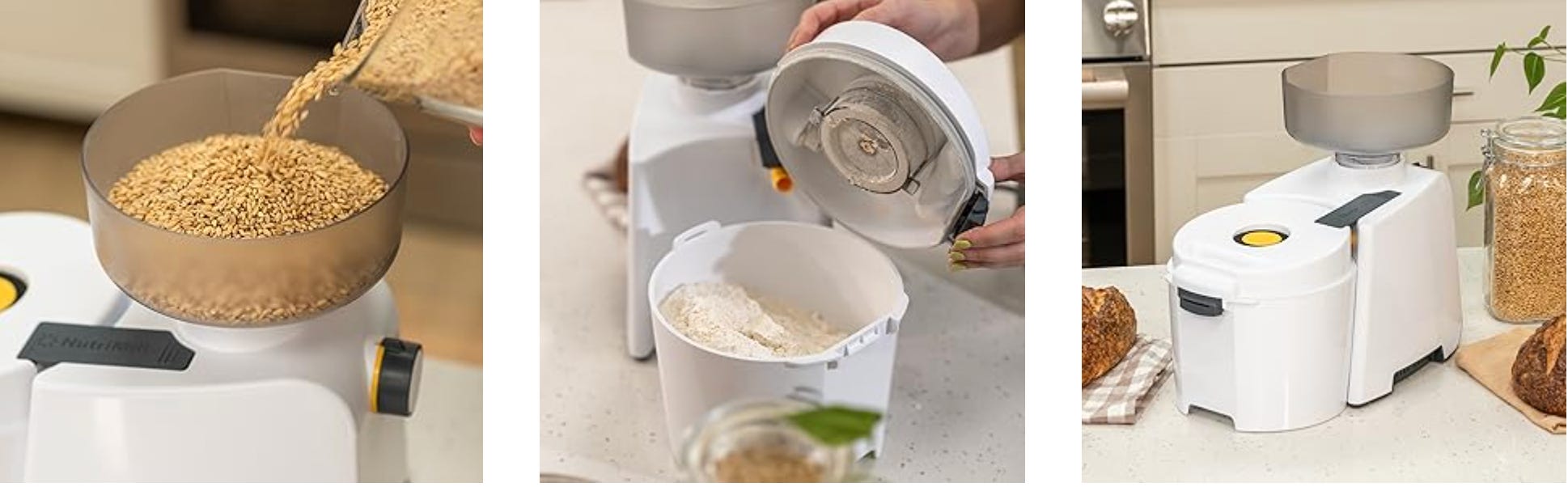
I use the NutriMill Compact electric grinder. It’s straightforward, fast, and remarkably easy to clean. I can finely grind several cups of wheat berries in less than a minute. The grain goes in whole, flour comes out warm and fragrant.
There are other excellent options at various price points:
MockMill (attaches to KitchenAid stand mixers)
Mockmill 100 (standalone)
KoMo mills (stone burr, beautiful but expensive)
WonderMill (high-speed impact mill)
Even hand-crank mills if you want the upper body workout and complete independence from electricity
The critical feature: the mill needs to produce flour fine enough for your intended use. Most modern electric mills can grind to any texture from coarse to powder-fine.
For Bread:
I mix and knead by hand. There’s something meditative about it, something that connects the process to ten thousand years of human hands working dough. The warmth of fresh-milled flour, the gradual development of gluten structure, the aliveness of fermentation happening under your palms.
But I understand that’s not everyone’s preference or physical capability. Good stand mixers with dough hooks work beautifully:
KitchenAid (with the MockMill attachment, you have an integrated mill-and-mix system)
Bosch Universal Plus (favored by serious bread bakers)
Ankarsrum (Swedish-made, unusual design, cult following)
For Pasta:
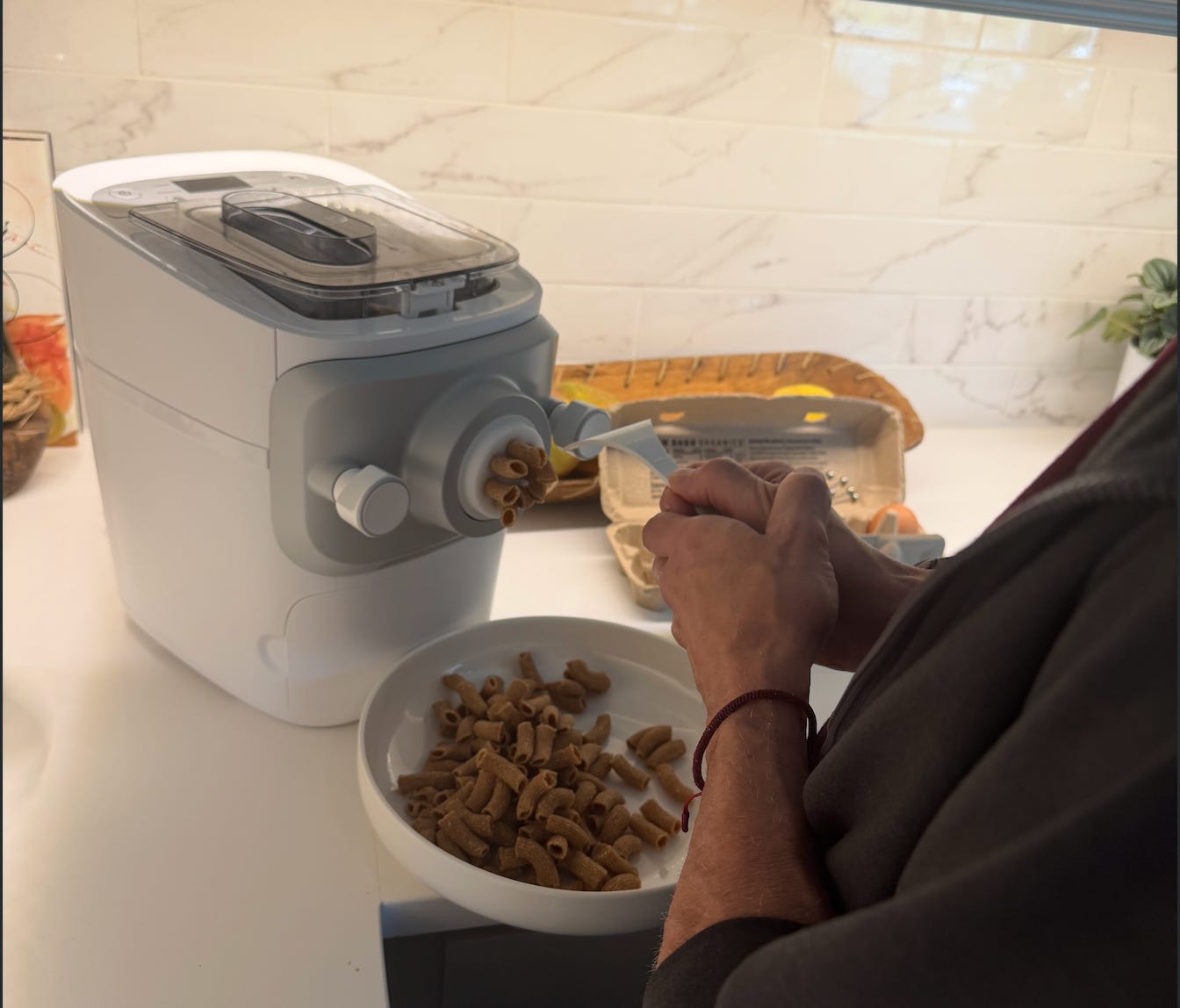
This is where I departed from tradition and embraced technology: the Philips 7000 Series Pasta Maker.
Here’s the workflow: Mill the flour. Mix eggs and water in a measuring cup. Pour flour into the machine’s chamber. Pour the egg-water mixture into the tray on top. Turn it on. In approximately three minutes, pasta begins extruding from the die. I cut it as it emerges, let it fall directly onto a floured surface, and within minutes it goes into boiling water.
From whole wheat berries to cooked pasta: 15 to 20 minutes.
Let that sink in for a moment. Fresh-milled, enzymatically active, nutrient-intact pasta, made from organic grain you selected, in less time than it takes to drive to a restaurant.
The Philips machine isn’t perfect. The dies aren’t interchangeable with traditional bronze dies. It’s plastic rather than metal. It’s a modern appliance, not an heirloom tool. But it removes the barrier of complexity that keeps most people from making fresh pasta.
Other pasta-making options exist:
Traditional hand-rolling and cutting (meditative, time-intensive, produces beautiful results)
Manual crank machines (Atlas, Marcato) for rolling and cutting sheets
KitchenAid pasta attachments (roller, cutter, extruder options)
Imperia or Mercato manual extruders
Choose based on your priorities: time, tradition, tactile engagement, volume of production.
The Grain: Varieties, Sources, and What I’ve Learned
I’ve experimented with several varieties:
Emmer berries (ancient tetraploid, nutty flavor, beautiful amber color)
Sprouted red wheat berries (slightly sweet, increased nutrient availability)
Turkey Red wheat berries (hard red winter wheat, my current favorite)
Turkey Red has become my default for reasons both practical and experiential. It’s a heritage variety, a hard red winter wheat that was brought to Kansas by Mennonite immigrants from Russia in the 1870s. It has strong gluten development, excellent flavor, and performs reliably for both bread and pasta.
But taste is individual. Experimentation is part of the process. Ancient varieties like Einkorn, Emmer, Spelt, and Khorasan offer different flavor profiles, different nutritional compositions, different gluten structures.
Sourcing Organic Wheat Berries:
Trusted sources I’ve used or researched:
Azure Standard (azurestandard.com)
Carries multiple varieties (Einkorn, Emmer, Spelt, Turkey Red, Hard Red, Hard White)
Organic certified
Delivery drop points across the U.S. (once a month, community-based)
Bulk pricing available (25-50 lb bags)
Breadtopia (breadtopia.com)
Specializes in whole grain baking supplies
Organic wheat berries, multiple varieties
Also sells mills, baking equipment, sourdough cultures
Excellent educational resources
Jovial Foods (jovialfoods.com)
Focuses on Einkorn specifically
Organic, carefully sourced
Einkorn berries, Einkorn flour (though I still recommend milling fresh when possible)
Palouse Brand (palousebrand.com)
Pacific Northwest regional grains
Organic heritage varieties
Beautiful website with farm stories
Pleasant Hill Grain (pleasanthillgrain.com)
Wide selection of organic grains
Also sells mills and grain storage
Good customer education
Sunrise Flour Mill (sunriseflourmill.com)
Organic, stone-ground
Whole berries and fresh-milled flour options
Small family operation in Minnesota
Bob’s Red Mill (bobsredmill.com)
Widely available in grocery stores and online
Organic wheat berries in retail packaging
Good starting point if you want to try before committing to bulk orders
Storage:
Whole wheat berries, stored properly in airtight containers in a cool, dark place, remain viable for years. I keep mine in food-grade 25-gallon buckets with gamma seal lids. Some people use Mylar bags with oxygen absorbers for truly long-term storage.
A 25-pound bag of organic wheat berries costs $50 to $100 depending on variety and source. That bag will produce approximately 37 pounds of flour (accounting for bran and germ weight). At current prices, that’s roughly $1.35 to $2.70 per pound of fresh-milled, organic, whole grain flour.
Compare that to $4 to $8 per pound for organic whole wheat flour at grocery stores, flour that was milled weeks or months ago and has lost 40-90% of its nutrient value depending on age.
The economics favor fresh-milling before you even account for the nutritional and biochemical differences.
The Process: Bread
Let me walk through my typical sourdough workflow.
Saturday Evening (or whenever you begin):
Mill 500 grams of wheat berries. The flour emerges warm, fragrant, alive with enzymatic activity.
In a large bowl, combine:
500g fresh-milled flour
350g water (filtered, room temperature)
100g active sourdough starter (I maintain mine with weekly feedings)
10g salt
Mix until shaggy dough forms. No need for perfection at this stage.
Cover the bowl with a damp towel or plastic wrap.
Walk away.
Sunday Morning:
The dough has transformed. It’s doubled in size, filled with air pockets, alive with wild yeast and lactobacilli. This 12-hour fermentation is where the magic happens: FODMAPs degrade, gluten proteins partially break down, enzymes from the fresh flour work alongside the sourdough culture to pre-digest the grain.
Turn the dough out onto a floured surface. Shape it gently, being careful not to deflate all the air pockets. Form it into a round or oblong loaf.
Place in a banneton (proofing basket) or bowl lined with a floured towel.
Let it proof for 2-3 hours at room temperature. It should grow noticeably but not quite double.
Sunday Afternoon:
Preheat the oven to 450°F.
Turn the dough out onto parchment paper. Score the top with a sharp knife or razor blade.
Bake covered for 30 minutes, then uncover and bake for another 15-20 minutes until deeply golden and the internal temperature reaches 200-210°F.
Remove from the oven. Let it cool for at least 30 minutes before cutting.
What emerges is bread that bears little resemblance to supermarket loaves or even artisanal bakery bread made from pre-milled flour. The flavor is complex, slightly tangy from fermentation, nutty from fresh grain. The texture is both hearty and light. The crust shatters. The crumb is open and irregular.
And your body recognizes it as food in a way it doesn’t recognize industrial bread products.
What About Fermentation for Pasta?
You’ll notice I don’t ferment pasta dough the way I ferment bread. There’s a reason: traditional pasta isn’t fermented, and the cooking time is so brief that even if you did ferment it, you wouldn’t get the full FODMAP reduction that long fermentation provides in bread.
However, some people experiment with sourdough pasta (adding starter to the dough, letting it rest for several hours before rolling). The results are more tangy, potentially easier to digest, and nutritionally different.
The speed of fresh-milled pasta, combined with the brief cooking time, means the enzymatic activity from fresh flour is still doing pre-digestive work when the pasta enters your stomach. That appears to be sufficient for my physiology.
The Questions People Ask
“Isn’t this time-consuming?”
The milling takes less than a minute. The pasta-making takes 20 minutes total. The bread-making requires maybe 20 minutes of active work spread across 18 hours, most of which is waiting while fermentation does the work.
Compare that to:
Driving to the store: 20-40 minutes
Ordering delivery: 45-60 minutes
Eating at a restaurant: 60-120 minutes
Once the process becomes routine, fresh-milling and pasta-making is faster than alternatives. Bread requires planning ahead but minimal active labor.
“What about the cost?”
Initial equipment investment: $300-600 depending on choices.
Ongoing costs: Organic wheat berries at $2-4 per pound yield flour that’s fresher, more nutritious, and ultimately less expensive than grocery store organic flour at $4-8 per pound.
The equipment pays for itself within a year if you were previously buying organic whole grain products regularly.
“I don’t have time for sourdough starter maintenance.”
Then don’t use sourdough. You can make excellent bread with commercial yeast using fresh-milled flour. The fermentation won’t be as long (typically 1-3 hours instead of 12-24), so FODMAP reduction won’t be as complete, but you’ll still get the benefits of fresh-milled, enzymatically active flour.
Or use a no-knead approach: mix ingredients, let sit overnight, bake the next day with minimal handling.
The Unexpected Benefits
I started this practice to solve a problem: grain sensitivity, inflammation, blood sugar instability.
Those problems resolved. But other things changed that I didn’t anticipate:
Connection to food. When you mill grain and work dough with your hands, food stops being an abstraction. You understand it as biological material, alive and responsive. This changes how you eat, what you choose, how you think about nutrition.
Time distortion. The modern food system trades time for convenience: you save 20 minutes of cooking by buying processed food, then spend 20 minutes driving to pick it up or waiting for delivery. Fresh grain processing feels slower but actually isn’t. And the time spent is meditative rather than transactional.
Sensory engagement. The smell of fresh-milled flour is intoxicating. The warmth of it in your hands. The transformation of hard berries into powder, powder into dough, dough into bread. These are experiences industrial food has excised from daily life.
Food security. Whole wheat berries store for years. A well-stocked pantry of grain, a working mill, and knowledge of fermentation make you resilient in ways that dependence on fresh produce and industrial supply chains cannot.
Conversation. Making fresh pasta or pulling a sourdough loaf from the oven generates questions, curiosity, engagement from others. Food becomes a teaching opportunity, a way to share not just meals but understanding.
An Invitation, Not a Prescription
I’m not suggesting everyone must do this. I’m not claiming moral superiority. I’m not building an identity around fresh-milled grain evangelism.
I’m simply documenting a process that worked for me, sharing the practical details that were hard to find when I started, and offering resources for anyone who wants to explore this path.
The research suggests that for many people reporting wheat sensitivity, the problem isn’t wheat itself but rather: under-fermentation, FODMAP content, glyphosate contamination, oxidized flour, destroyed enzymes, and powerful nocebo effects.
Fresh-milling, proper fermentation, and organic grain selection address the first five variables directly. The sixth variable, expectation and psychology, is more complex, but engaging with grain as a living material rather than an industrial commodity creates a different psychological relationship with food.
Maybe that matters. Maybe it doesn’t. I can only report my experience.
From wheat berry to table, the path is shorter than you think. The barriers are lower than they appear. The benefits extend beyond what you can measure.
The invitation stands: try it once, see what you notice, decide if it’s worth incorporating into your life.
The grain is waiting, whole and patient, ready to be transformed by your hands and made nourishing again.
Thank you so much for sharing all these details. Can’t wait to try it! Do you feed your starter with the milled flour, too?
Talking about pasta, there are numerous pastas made from water and beans, nothing else. I eat the dried organic commercial ones, but have never tried creating in the home. Any thoughts?
Also, I have made sourdough bread, ground my own grains for over 20 years. It is a true staff of life. Thanks for your very interesting articles!